
Page Contents
Last updated: October 2026
Good UX needs the right tools at each stage: sketching ideas, building prototypes, testing with users and learning from real behavior. But tool lists age quickly. Products get acquired, retired or rebuilt around AI, and a “best tools” article that was accurate two years ago can send readers to something that no longer exists. This guide groups UX design tools by job, notes the status changes we could verify, and explains how to choose a set that fits your team.
We do not quote prices, because they change often and come from third-party aggregators. Check each vendor’s pricing page before you buy. Where facts come from secondary sources, we say so.
What Qualities Does a Good UX Design Tool Have?
- Fits your workflow. It exports to the formats your developers and teammates use.
- Supports collaboration. Shared files, comments, version history and permissions matter for teams.
- Reusable components. Libraries and design systems keep work consistent. See CRAP design principles.
- Prototyping that is close to the real thing, with interactions, states and responsive behavior.
- Handoff features, such as specs, assets and code snippets.
- Accessibility checks, such as contrast and focus order. WCAG asks for at least 4.5:1 contrast for normal text.
- Healthy vendor. Active development, clear support and a plan for your data if the product changes.
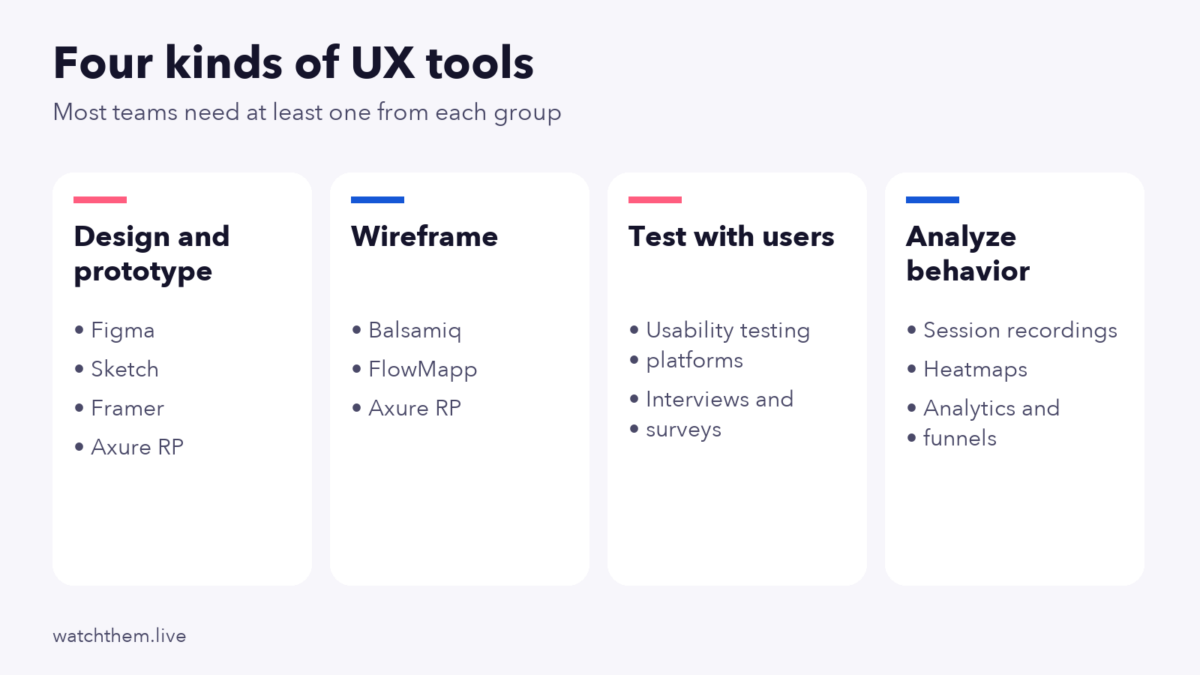
Four Kinds of UX Tools
Most teams need at least one tool from each group.
1. Design and Prototyping Tools
These create screens, components and clickable prototypes.
- Figma: a browser-based collaborative design tool and the most widely used option in many teams. At its Config event in May 2025, Figma announced Figma Sites and Figma Make, tools for building websites and generating prototypes from prompts, which one report says are available to paid full-seat users. Check the current plans and limits on Figma’s site.
- Sketch: a long-standing, Mac-native design tool with a plugin ecosystem. It suits teams that work only on Macs.
- Framer: a design and publishing tool that lets designers build interactive sites and prototypes with a focus on production-ready pages.
- Axure RP: a tool for detailed, logic-heavy prototypes, with conditions, variables and dynamic content, often used for complex enterprise flows and specifications.
- Origami Studio: a prototyping tool from Meta aimed at interaction and motion design. Check its current status and support before you adopt it.
2. Wireframing Tools
- Balsamiq: low-fidelity, sketch-style wireframes that keep discussions on structure instead of visual details.
- FlowMapp: a tool for user flows, sitemaps and wireframes, useful for planning structure before design.
- Whiteboards and paper: often the fastest way to explore ideas with a team.
3. Research and Testing Tools
Prototypes need real users. Use tools for remote moderated and unmoderated usability tests, surveys, card sorting and tree testing. Five to ten users often reveal most major problems, based on Nielsen and Landauer’s model as summarized in secondary sources, but small tests cannot give reliable rates. See usability testing methods.
4. Behavior Analytics Tools
After launch, you need to see how real people behave. WatchThemLive covers this group:
- Session recordings to watch real visits, including hesitation, errors and rage clicks.
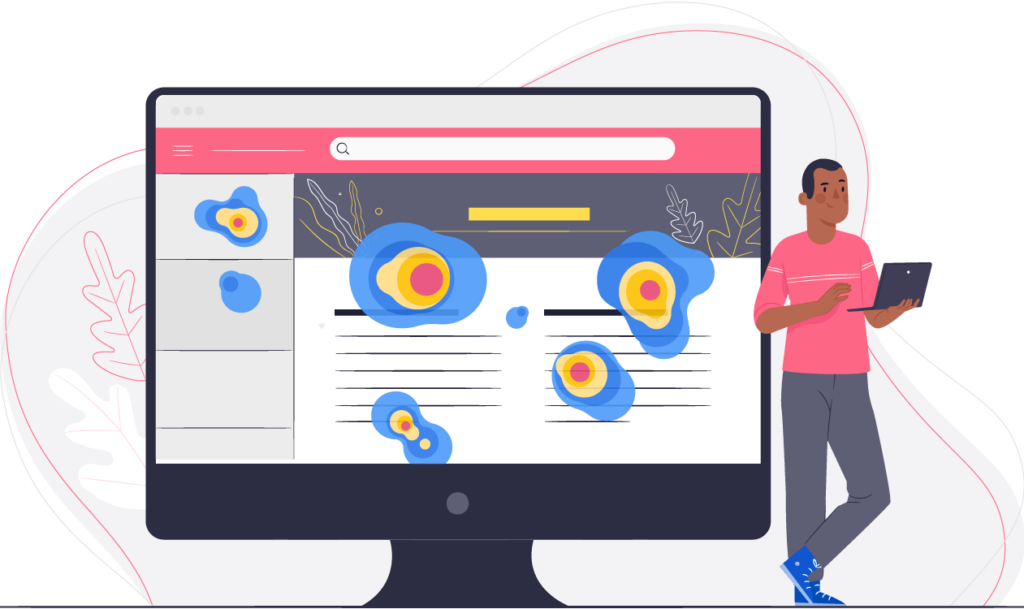
- Heatmaps to see clicks, mouse movement and scrolling on desktop, tablet and mobile.
- Goal and event tracking and website analytics with filters for device, country and traffic source.
These tools answer questions that design tools cannot: Do people notice the button? Where do they hesitate? Which step loses them? See UX analysis for how to use the data.
Tool Status: Why Old Lists Go Stale
Several tools that appeared on older “best UX tools” lists are no longer a safe recommendation:
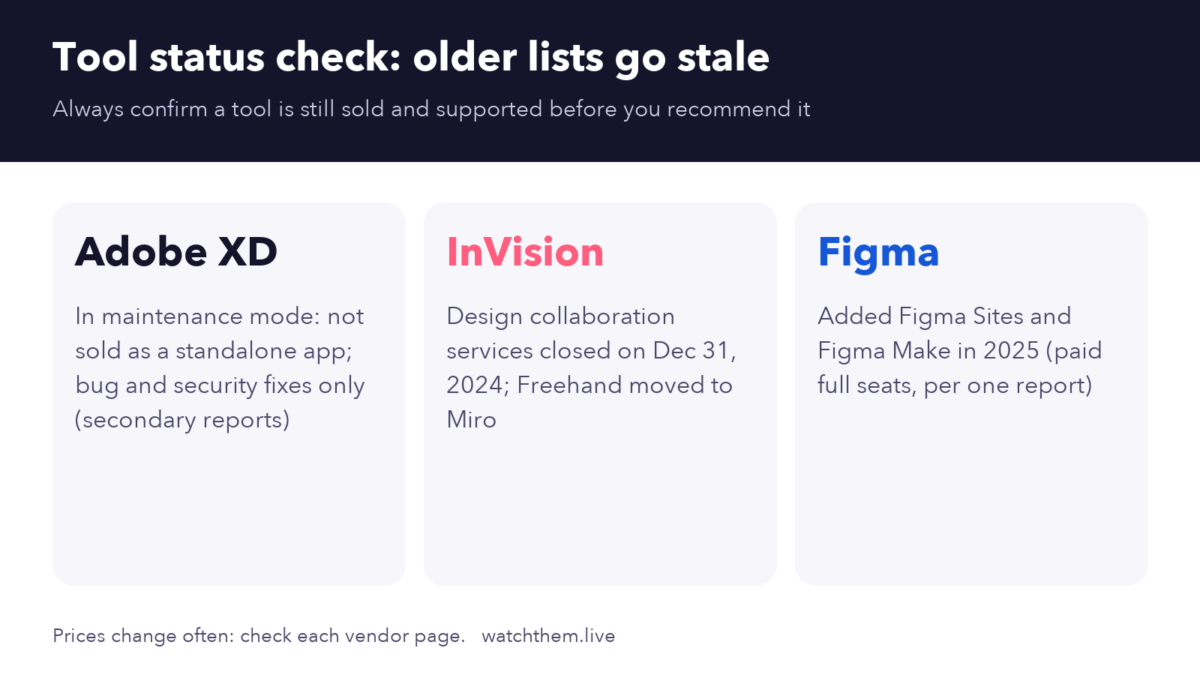
- Adobe XD is in maintenance mode. According to reports quoting Adobe staff, it is no longer sold as a standalone app and gets bug and security fixes but no new features. Existing users can still use it, but it is not a good choice for new projects.
- InVision announced in January 2024 that it would discontinue its design collaboration services, including prototypes, at the end of 2024, and access ended on December 31, 2024. Its Freehand product was acquired by Miro.
- Others may change, too. Before you commit, check that a tool is still sold and updated, what happens to your files if it closes and how easily you can export your work.
If you still use a retired tool, export your files now and plan a migration.
How to Choose UX Design Tools
- List your jobs. Do you need wireframes, high-fidelity design, prototypes, tests or analytics?
- Consider your team. Size, platform (Mac, Windows, browser), skills and budget all matter.
- Test with a real project. Run a pilot on a small feature, not a demo file.
- Check integrations. Does it work with your issue tracker, design system and developer handoff?
- Review vendor health. Look at update history, support and export options.
- Start small. A few tools used well beat a large stack nobody maintains.
Sample UX Toolkits
- Solo designer or small team: one design and prototype tool, one testing tool, session recordings and heatmaps.
- Product team: a collaborative design tool with a shared component library, a research platform, analytics and recordings, and a way to run A/B tests.
- E-commerce or marketing team: a simple page builder or design tool, heatmaps, recordings, goal tracking and an A/B testing tool. Google Optimize shut down on September 30, 2023, so use a third-party platform. See CRO tools.
UX Tools for Small Teams and Beginners
You do not need an expensive stack to start. A beginner can learn one design tool well, sketch ideas on paper first, run quick tests with five users and add free tiers of analytics and behavior tools to learn from the live site. Spend the first month on the basics: layout, hierarchy, spacing and simple prototypes. Add research and analytics habits next, because understanding users matters more than owning the newest software. As the team grows, add shared component libraries, a research repository and a standard handoff process.
Whatever you choose, keep copies of your work in an open format when possible, so a vendor change cannot trap your files. This is exactly the lesson of the tools that closed or changed in recent years.
Tips for Getting More Value From UX Tools
- Build a design system early, with shared colors, type, spacing and components.
- Keep a research repository, so findings are searchable.
- Connect design to data. Pair each design decision with a metric. See UX metrics.
- Test prototypes before building, because changes are cheaper on paper than in code.
- Check performance after launch. Google’s Core Web Vitals target a Largest Contentful Paint of 2.5 seconds or less, so heavy designs can hurt results.
- Review accessibility with contrast checkers and keyboard testing.
For improving a live site, see UX optimization, and for the principles behind good tools, UX design principles.
How Tools Fit Into the UX Process
- Discover: interviews, surveys and analytics to understand users and problems.
- Define: personas, journey maps and a clear problem statement.
- Ideate: sketches, whiteboards and low-fidelity wireframes.
- Prototype: clickable designs that feel like the real product.
- Test: usability tests with real people, then revise.
- Build and launch: handoff to developers, with specs and assets.
- Learn: recordings, heatmaps, analytics and feedback show how the live product performs.
Using a tool at the wrong stage wastes time. A polished prototype is a poor way to test a rough idea, and a wireframe cannot tell you how a live checkout performs. Match the tool to the question you are asking.
Common Mistakes When Choosing UX Tools
- Following a list without checking the date, and picking a retired product.
- Buying too many tools, which splits files and knowledge.
- Ignoring export options, and then getting locked in.
- Skipping analytics. Design tools do not tell you how real users behave.
- Letting the tool drive the design, instead of the problem.
Frequently Asked Questions About UX Design Tools
What are the best UX design tools?
It depends on the job. Figma, Sketch and Framer are common for design and prototyping, Balsamiq for wireframes, usability platforms for testing and behavior analytics such as recordings and heatmaps for live sites.
Is Adobe XD still available?
Reports say Adobe XD is in maintenance mode and no longer sold as a standalone app. Existing users get fixes but no new features, so avoid it for new projects.
What happened to InVision?
InVision discontinued its design collaboration services, including prototypes, and access ended on December 31, 2024. Its Freehand product was acquired by Miro.
Do I need a paid tool to start?
Many tools offer free tiers or trials, which are enough for a pilot. Check the current limits on each vendor’s site.
How do I test a design before building it?
Build a clickable prototype, give users tasks, watch where they struggle and fix the problems before development.
Conclusion
Choose UX tools by the job you need to do: design and prototype, wireframe, test with users and analyze real behavior. Avoid lists that have not been checked recently, because tools such as Adobe XD and InVision have changed or closed. Pick a small set, run a pilot, check export options and connect every design decision to a metric. The right tools make good UX faster, but the real work is still understanding your users.
